Something has changed in the air; it’s hard to describe exactly what, but you can feel it. One morning, without warning, summer has vanished. The last whiffs of barbecue smoke have faded away, the restaurant terraces are empty, and you feel a slight twinge of sadness, as at the end of every season. It’s the start of a period when the mountains are draped in their softest colours, with golden larch trees and the first snow on the peaks.
Winter is around the corner, but before that, is a lesser-known season – more discreet, less hotly anticipated, but just as beautiful in its own way.
A landscape attired in gold
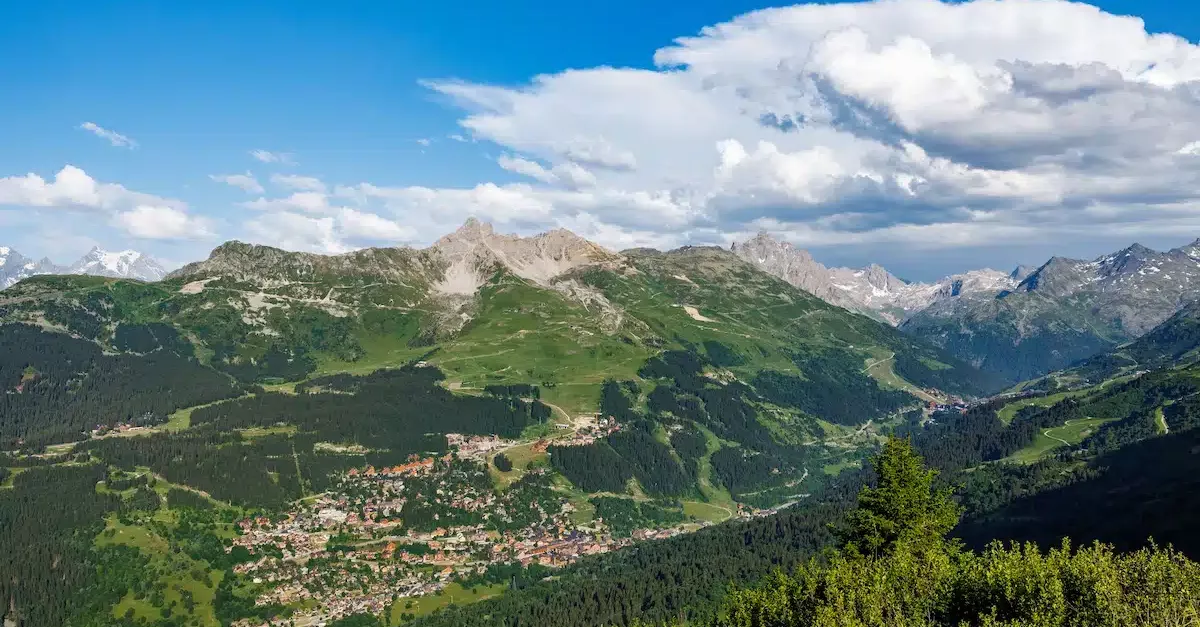
The lush green summer of the last two months, seen from the 3 Vallées peaks, has already given way to a completely different spectacle. Unlike fir and pine trees, which retain their dark green colour all year round, larch is the only conifer to shed its needles before winter. Before they drop, they turn from soft green to golden yellow and then to copper, setting the mountainsides ablaze.
The result? The entire mountainside changes its appearance in a matter of weeks, offering new landscapes to anyone willing to come and enjoy them. The uniform green of summer gives way to a mosaic of gold and copper, transforming the paths you’ve walked all summer long.
The trails are emptying, and wildlife is reclaiming its territory
The walking paths, as their appearance changes, are emptying of the visitors that filled them all summer. Groups of walkers are becoming a rarity, the mountain huts are falling silent, and a calm descends where hustle and bustle reigned just a few weeks earlier.
This newfound tranquillity especially benefits the mountain’s other inhabitants. Chamois are gradually descending from the heights of the Vanoise, and marmots step up their preparations before disappearing for the winter. On many walking paths, it is animal tracks you’ll come across rather than other walkers.
From mid-September until mid-October, a hoarse cry echoes through the valley: the bellow of stags. This call signals the start of the rutting season, during which the stags are in an excited state. A word of advice: it’s best to listen from a distance and not approach them. Not that they’re particularly dangerous, but a stag in the midst of a display isn’t keen on you coming up to take a selfie next to him.
In addition, the herds are coming down from the mountain pastures at this time. It’s always a pleasure to see them, provided you respect their space. Be prepared to make a minor detour, making sure gates are properly closed and keeping your dog on a lead – and the encounter will remain friendly even if a guard dog comes to inspect you.
For a few weeks, Méribel takes on a completely different, almost silent atmosphere. Yet it loses none of its charm – quite the opposite: there’s still plenty to do, and the locals make the most of this. Many take the opportunity to explore the mountains in a different way, on e-mountain bikes along the numerous empty trails. Whilst the ski lifts are out of service, the entire biking area remains available to explore, offering a sense of freedom unique to this time of year.
This same sense of freedom is also enjoyed by local paragliders, over a landscape completely transformed by the bright autumn colours.
As the trails empty, so do the roads, much to the delight of our cyclists, who make the most of this time of year by riding without a care along deserted roads, amidst scenery that changes as winter nears.
It’s at this moment, just before winter takes over, that autumn reaches its peak. The first snows are already crowning the surrounding ridges, whilst below, everything remains golden, a brief moment suspended in time.
As for hiking, it’s much the same story. At higher altitudes, the longer routes take on a different character; the light is different, and you feel alone in the world, until a marmot’s cry brings you back to reality. Even if you stay in the valley floor, walks between the villages hold new surprises, and every outing allows you to rediscover the valley’s riches.
In the forests, it is not just the wild game that are active. Beneath the larch and spruce trees, porcini and chanterelle mushrooms hide beneath the ferns and carpets of pine needles, their caps barely peeking out of the ground. To find them, all you need is to know the right spots and to have some patience. That deep, earthy scent wafting through the air never fails to reveal what lies just beneath. Further down the valley, bilberries and lingonberries can be picked amongst the stones and tufts of heather.
These finds are a boon to chefs, who love to put a new spin on Savoyard cuisine using what grows just a stone’s throw from their homes, but they’re just as much a treat for the locals who know all the best spots. They’re unlikely to share them with you, but you are most welcome to track them down yourself – it’s well worth the effort.
So now you know why, for many people here, autumn remains the second most beautiful season of the year. When the first snows blanket Mont Vallon, the landscape will take on an almost surreal quality. Down below, the valley will still be cloaked in gold, and this contrast between snow and autumnal colours will herald the approaching winter, sparking a sense of excitement throughout the resort.
Do you fancy discovering Méribel in this different guise? We hope to see you here soon!
It’s hard to believe, but the start of the new school year is already upon us, and we’re still wondering how summer could have flown by so quickly. So many adventures, shared emotions and memorable moments have marked this season that it will certainly be one to remember.
Before we turn the page for good and dive headfirst into winter, we’d like to take a quick look back at this unforgettable season and relive some of its best moments together.
Because we know that going back to school is not easy for some… we’ve got a little surprise in store for you at the end of the article
The best moments on video
Thrilling events all summer long
Méribel Hybrid Games
A first edition is always special, and this one set the bar very high. At the start of the season, more than 300 athletes from all walks of life climbed up to the Col de la Loze before tackling the challenges of a full HYROX course, at an altitude of over 1,700 metres, watched by a crowd buzzing with excitement. With the whole event fuelled by a village in full swing, complete with DJs, an MC and spectators turning out in droves, this first run of the event will long be remembered.
Fête à Fanfoué
On the first weekend of August every year, Les Allues pays homage to its history and traditions for the duration of the weekend. In the narrow streets, the past came to life with horn players, flower-decked floats and traditional costumes.
Fresh bread baked in the village oven, the centre of the village turned into a giant outside restaurant, all ages coming together to dance the night away, a whole weekend of laughter and fun, connection and a celebration of what gives the valley its soul.
A trail running weekend to remember
Méribel Trail / Mountain Ridge Night Run / Vertical Kilometre
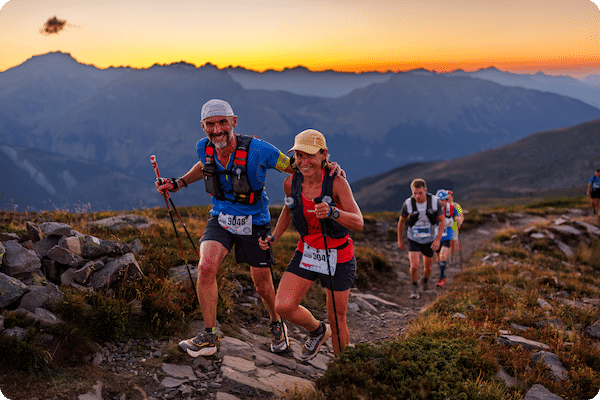
The trails were lined with runners for one of the summer’s major sporting events. A major new feature of this year’s event, the “Nocturne des Crêtes” kicked off the festivities in style with a 22-kilometre route at high altitude, along the ridgeline, with the setting sun as a backdrop. The runners swapped the afternoon heat for the dazzling evening light, their silhouettes dancing along the ridgeline, set against the glowing peaks.
To spice up the weekend, the Vertical Kilometre was part of the festivities: 1,000 metres of elevation gain to tackle in under 4 kilometres, one of the most gruelling challenges some runners have ever faced.
Between this vertical challenge, the Méribel Trail and the Nocturne des Crêtes, it was a real pleasure to welcome you all for a few days to share in the same passion. A weekend where experienced athletes and amateurs came together to push themselves to the limit, in pursuit of a shared sensation: pushing their boundaries against the backdrop of the majestic peaks of the Alps.
We also took time for a breather
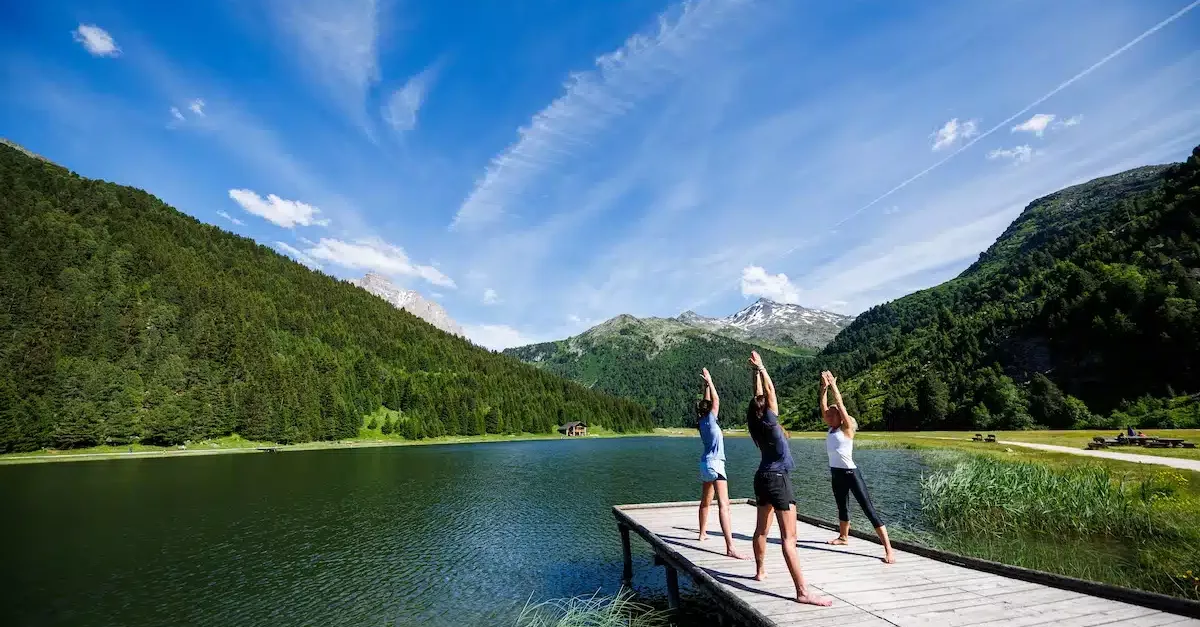
Summer in Méribel isn’t just about race numbers and stopwatches. For three days, Zen Altitude set the tone: three days of yoga, breathing exercises and treatments in beautiful natural surroundings, a welcome change of pace. Hotel spas welcoming those looking to unwind, yoga sessions taking place with the peaks as a backdrop, and Lake Tuéda becoming a haven for anyone who preferred to take it easy at a lower altitude
It’s impossible to talk about Lake Tuéda without mentioning Thibaut, who brought the Maison de la Réserve de Tuéda to life throughout the season; through exhibitions, activities and nature walks, he inspired many a visitor to see the mountains in a new light.
Even with the grey of Autumn, one thought is already a comfort: in just a few short months, the winter season will finally begin. The ski lifts reopen on 5 December 2026 and bookings for accommodation are already open, with some great promotional offers for the quickest to act!
And so the curtain falls on the summer of 2026. We’ve run, climbed and cycled, but we’ve also made time to savour the moment. If this season will remain etched in our memories, it’s largely thanks to you. Thank you for being here, thank you for all the smiles we’ve seen light up your faces, and thank you for making Méribel so magical, season after season. We hope it has left as lasting an impression on you as it has on us.
In short, we’ve experienced the mountains in all their glory. What’s next? The story is already being written behind the scenes, Méribel is preparing its white coat for the coming season. We can’t wait to see you here again!
rqué
So, whether it’s a week away together or a day out whilst the children are being looked after, here’s how to make the most of it with your partner.
The flight from the Altiport
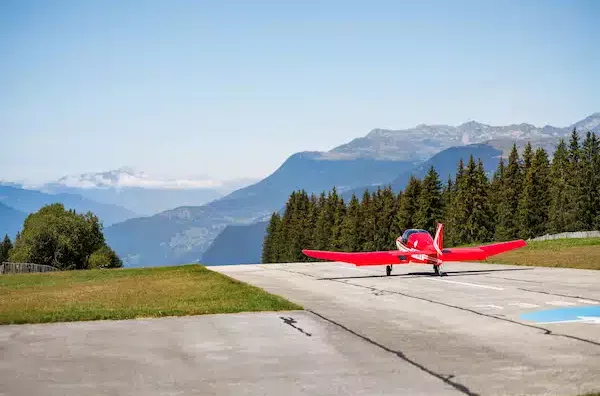
The first activity we’d recommend to spark the romance on a day made for two takes place at the Altiport, where a small plane awaits you for a flight over the 3 Vallées. Taking off in the heart of the mountains is always a thrilling experience. Up, up and away, for a moment of timeless bliss, with your partner sitting opposite you and the Alps stretching as far as the eye can see. Up there, time seems to stand still as you glide over the villages and prairies below, and nothing else but this special shared moment seems to matter.
White-water activities
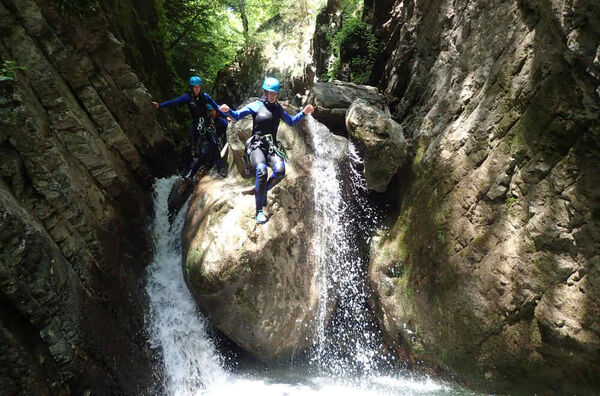
Back on solid ground, it’s time for a whole different kind of playground. Standing at the edge of a canyon’s first jump, there’s always that split second of hesitation where neither of you dares to go first, until one of you finally takes the leap, pulling the other along in the process. The cold water knocks the breath out of you for a moment, then the laughter takes over. In that moment, nobody needs to play brave anymore, everyone’s just trying to make it through the best they can. Watching your partner hesitate, push through the fear, get a little frustrated because you’re not helping enough, these are the moments that end up telling the story of an afternoon spent together better than anything else.
From a hike to a night in a refuge
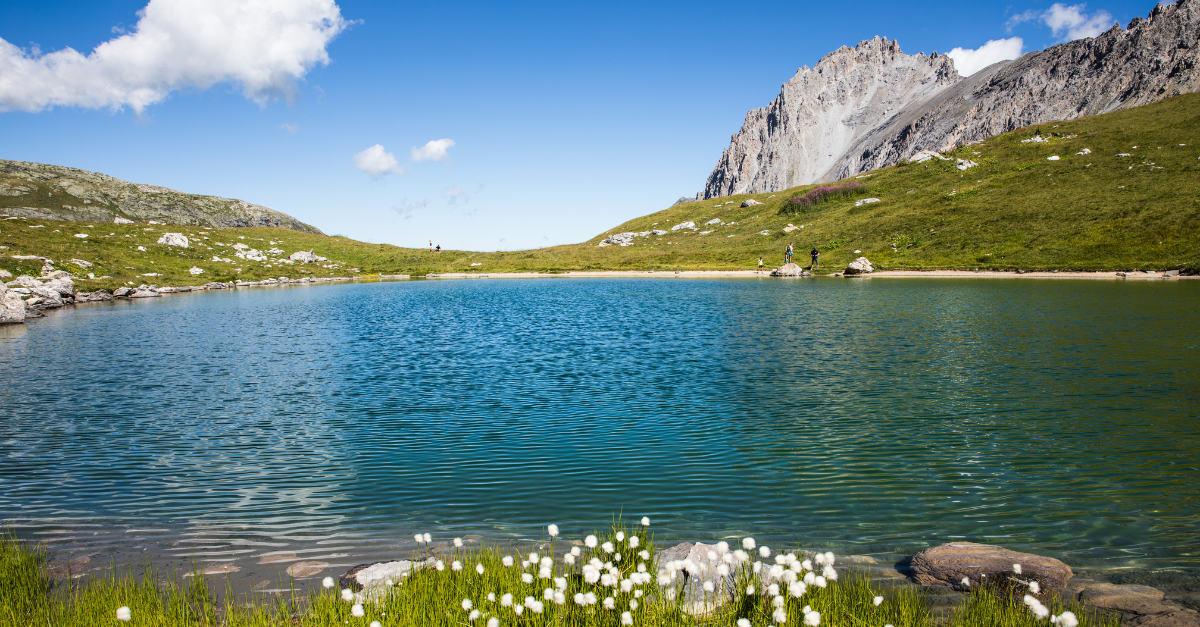
The trail climbs gently towards the Refuge du Saut, crossing a green plateau where the first glimmers of a high-altitude lake appear off to your right. You walk at your own pace, following the Doron river, one hand reaching for the other, stopping now and then to take in the view over the Lac des Fées. Thought you’d have this moment to yourselves? Think again, our marmots have been watching you for a while now.
For a truly out-of-the-ordinary experience, why not extend the adventure with a night in one of our mountain refuges, each with its own character. This kind of night has nothing in common with even the most comfortable chalet stay. You hike up on foot, share your meal at the same table as the other hikers passing through, and little by little, silence takes over. Some refuges keep things simple for an authentic experience, while others hold a few surprises, attentive service, comfortable rooms, even a Nordic bath or spa perched on the mountainside.
With no mobile signal or distractions, it’s just the two of you, far from it all, for a night you’ll never forget.
Taking care of each other
After so many shared emotions, it’s important to take a proper break, both for the mind and the body. A massage in a double treatment room allows both bodies to relax at the same time. You’ll find practically every type of massage, spa and treatment imaginable in the resort. To discover all the best places to go, check out our article on the art of relaxation in Méribel.
Ending the evening on a high note
Sunset on the summit
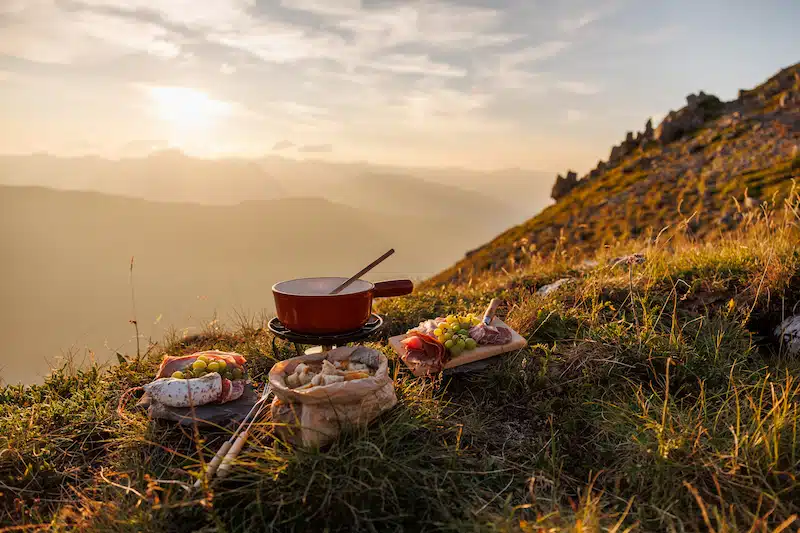
For a truly romantic short excursion, walk up or take the Tougnète 1 and 2 lifts to reach the ridge between our valley and the next. Once you’re up there, let your instincts guide you – every secluded spot off the main path could become your spot for the evening. With the picnic blanket laid out, it’s time for an aperitif, with the panoramic view stretching across the whole valley as the sunset gradually sets the sky ablaze. A timeless moment, reminiscent of the experience in the air a few hours earlier with the Aero Club.
The descent by headlamp, just the two of you together in the heart of the mountains, adds a real touch of adventure to this memorable night-time outing.
With a little less effort
Fancy the same view without having to walk there and back? L’Altiport and Le Plantin offer equally breathtaking panoramic views, accessible by car (and bus for the Altiport), so you can leave whenever you like. Each spot has its own unique atmosphere.
L’Altiport charms with its unobstructed view of the golf course, a rather intimate setting for those seeking peace and privacy. Le Plantin, on the other hand, focuses on a convivial atmosphere with picnic tables and self-service barbecues – two very different atmospheres to suit whatever takes your fancy at the time.
You don’t need to tick everything off this list; just one of these experiences will spice up your stay, whether you’re staying for a week or just an afternoon for two. The only question is which one will light up your next romantic getaway in Méribel.
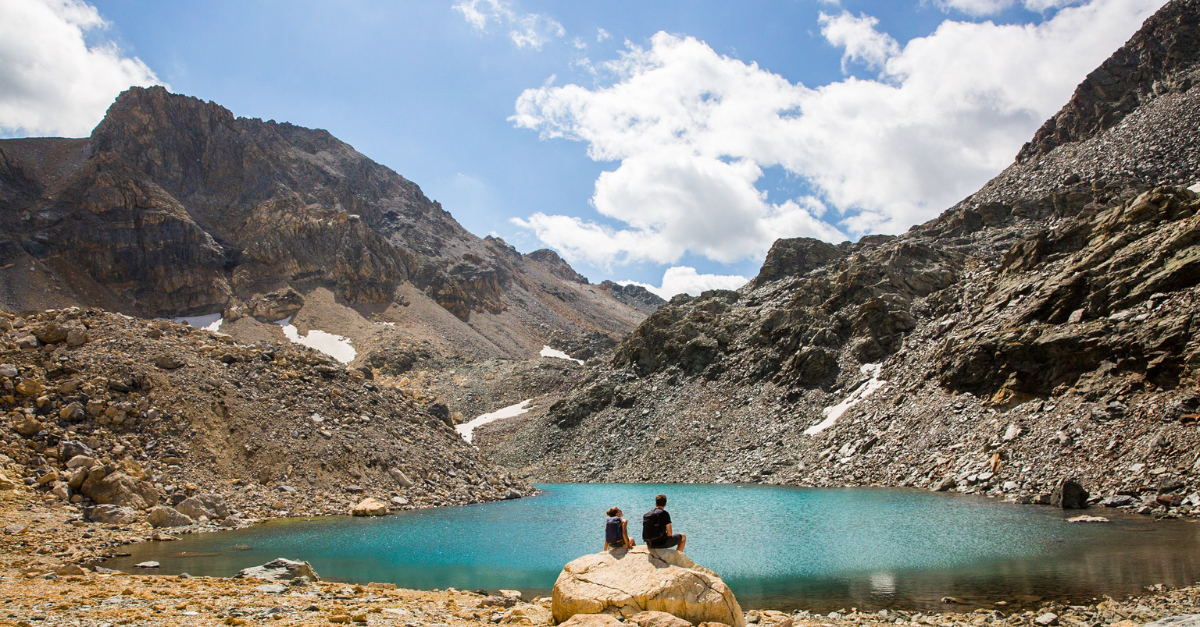
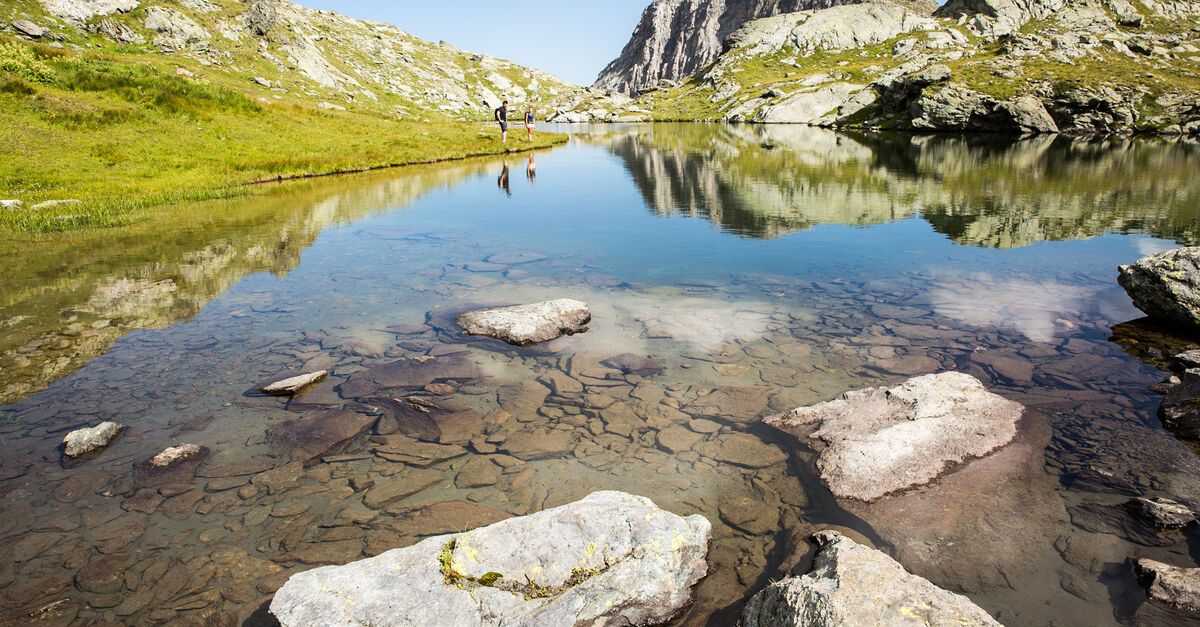
The Méribel valley and the Vanoise National Park are home to a wealth of high-altitude lakes, each one a majestic site waiting to be discovered. Across the Méribel valley alone, you’ll find more than a dozen mountain lakes, including the stunning Lac du Mont Coua, perched above 2,500 metres, the mystical Lac des Fées, a favourite haunt of marmots, and the ever-popular Lac de Tuéda, nestled at the heart of the Plan de Tuéda nature reserve. This last one remains easy to reach, but it’s really towards its more secluded, harder-to-reach neighbours that this article will take you.
Discover all the ways to go hiking in the heart of the Alps, whether guided or independent, on a day trip or with a night spent in a mountain refuge, along easy paths or more demanding routes, there’s no shortage of ways to explore these captivating mountain lakes.
Explore the Vanoise National Park from le refuge du Saut
Lac de Chanrouge and many more
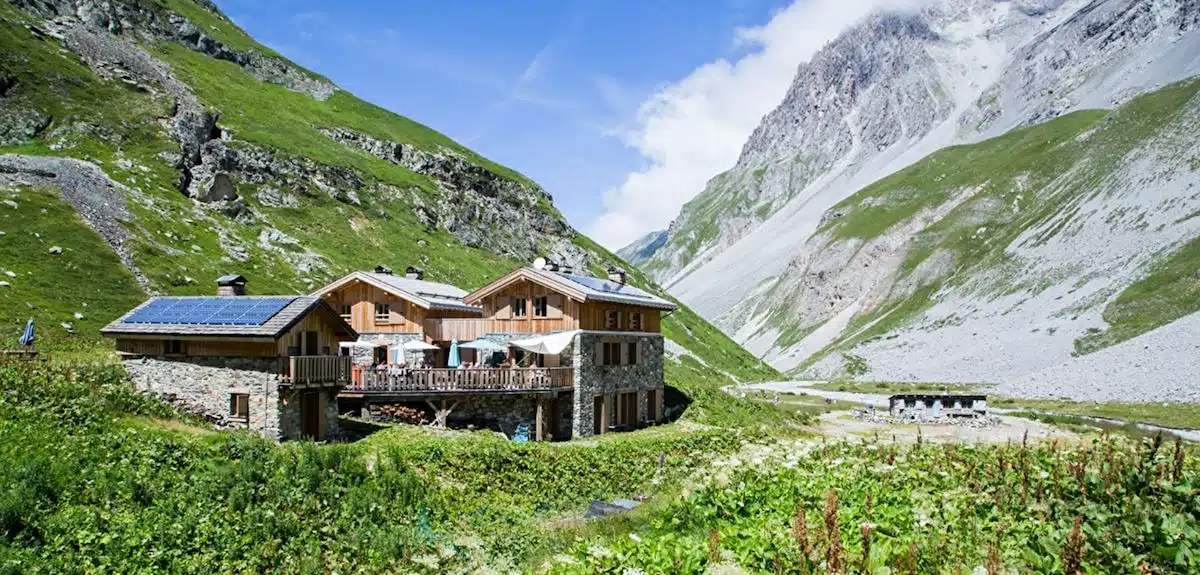
Lying at the edge of the Plan de Tuéda Nature Reserve, the refuge du Saut is the ideal base for all walkers and lovers of wild mountainous areas. From here, you can easily explore all the rich and varied wildlife, flowers and landscapes of the Vanoise National Park on a half- or full-day walk. For example, you can ascend the impressive col Rouge with a pause at the lac de Chanrouge where you can often spot ibex.
You could also walk to the immense Gebroulaz glacier, the source of the Doron river, and either content yourself with admiring its ice from below or, if you are feeling bold, by climbing up to le col du Souffre. Or you could cross le mont Coua in search of its six lakes in a sumptuous high mountain setting.
The refuge du Saut is eco-friendly: it uses solar panels and wind-turbine driven ventilation; drinking water is treated on site; sanitation is treated nearby; and wood is used for heating. It can take up to 25 people in comfortable accommodation of modern standards.
You can reach it easily from le lac de Tuéda (allow around 2 hours and follow the signs). For example, take the green Tuéda circular walk given above.
Mont Coua lakes
6 lakes in an exceptional wild landscape
From le Plan and le lac de Tuéda, this walk over le Mont Coua and to its lakes takes approximately 7 hours with a total ascent of 1,000m. It can be achieved in one day by experienced walkers. For a gentler and more contemplative immersion in the mountains, you can take two days to complete the walk by spending one night in le refuge du Saut.
This walk will allow you to admire numerous lakes including the six spectacular Mont Coua lakes which lie between 2,520 and 2,820m in a striking, rocky setting.
📍 Step 1 :
From the plan Ravet car park in Mottaret (1,681m), set out towards the refuge du Saut, passing by the lac de Tuéda. After the lake, continue towards the refuge du Plan, then the refuge du Saut (signposted), climbing some fairly steep passages. Enjoy a breather along the flat Vallon du Fruit area, by the meandering Doron des Allues river as it flows through the green and flowery pastures.
Don’t miss the discrete but nonetheless superb lac des Fées, hidden to the right of the path. Rejoin the path which rises and passes through a narrow gully before reaching le refuge du Saut (2,140m). Spend the night at the refuge.
⌛ Around 2h
🏔️ Elevation gain : 450m
📍 Step 2 :
From le refuge du Saut, follow in the direction of Col du Soufre and climb up to the footbridge over the Doron des Allues (2,440m). After the footbridge take the path to the left (East) towards the lacs du Mont Coua. This is not marked, but the trail is clearly visible. After the first small lake, a little off the path, you will reach the second lake. Follow the little path and the cairns on the right (south-east) towards the largest lake (2,672m); this lake is highly prized by fishermen. After the large lake, continue along the little path following the cairns (south-east) towards the fourth and the fifth lakes (2,780m). You can, if you have enough time and the weather is favourable, continue to the sixth lake…
Above the fifth lake, find the le petit collet (2,787m) to the north (Passage des Eaux Noires), indicated by large cairns. Go down into the valley on the right of the Mont Coua cliffs. You will see numerous cairns in the beautiful, ochre-coloured scree. There are a few steep passages but no technical difficulties through this scree. This route does not appear on the IGN maps (the blue marks indicate a ski touring route). There is no difficulty in finding your direction: simply go down into the valley (north) and at the bottom you’ll find greenery and the marked path that leads to the col Rouge.
⌛ Around 4h
🏔️ Elevation gain: 700m
📍 Step 3 :
Head back down from the Refuge du Saut via the Plagne plateau and the Bois des Ramées, most of the descent shaded by the forest before reaching Méribel-Mottaret. Don’t underestimate this final stretch, the first two legs of the hike are already demanding enough as it is.
⌛ Around 2h
🏔️ Elevation gain : 450m
Tour around Aiguille du Fruit
Two-day loop with a night at the refuge
🥾 Day 1
Meet at the plan Ravet cark park and start from the lac de Tuéda and head towards the refuge du Saut. When you arrive on the plateau de la Plagne, continue to the edge of the plateau to discover the crystalline lac des fées that is hidden on the right, 50m from the path. Continue to the refuge du Saut then follow the directions towards le lac de Chanrouge. You can sometimes see Ibex here. Rejoin the path that leads to the col de Chanrouge and head towards the lacs Merlet. The path goes along the valley then climbs to les lacs Merlet.
Spend the night at le refuge des lacs Merlet (nb: book in advance).
⌛Around 5h from Lac de Tuéda > refuge des lacs Merlet
🥾 Day 2
From the refuge, go over the cols de la Platta, de Chanrossa and then du Fruit before descending to Méribel-Mottaret, passing by lac Tuéda.
⌛ Around 4h from refuge des lacs Merlet > Lac de Tuéda
The lake tour
For experienced hikers
This long walk, which takes on average 9 hours, will allow you to discover the most beautiful lakes in the Plan de Tuéda Nature Reserve and the Méribel valley
📍 Step 1 :
At the entrance to the Nature Reserve (start from the plan Ravet car park) follow the tarmac road for 50m before the toilets, a small path sets out on the left, and joins a hairpin bend on the road to le Châtelet. Go along this and then head in the direction of le Refuge du Saut, 50m after the last garages on the right, by going around and behind the last buildings of le Châtelet. Cross a little stream, then follow the path towards the refuge du Saut until it opens out at the large plateau de la Plagne.
Descend to the plateau and cross the footbridge to join the main track, still heading in the direction of the refuge. Continue along the plateau to the chalets de la Plagne and head in the direction of le col du Vallon (2,394m). Once you reach the pass, go towards the left, ignoring the path to the side which leads to the old mine.
⌛ Around 3h
📍 Step 2 :
The path climbs up to a vast scree from the Mont Vallon just above the lac du Vallon. Follow the path around the mountain, it passes underneath the gondola ski lift amongst large blocks of rock and skirts the Mont du Vallon, offering a view over the entire valley, and leads to the lacs du Borgne (2,552m).
This rocky area is dominated by the glacier du Borgne. The path crosses the scree as far as the foot of the col de la Chambre and continues up the left of a large slope which in winter forms a ski run. In just 15 minutes you will reach the magnificent lac de la Chambre (2,637m).
⌛ Around 2h30
📍 Step 3 :
Retrace your steps for a few minutes back to the junction, then head left towards Côte Brune, Plan des Mains, Mûres Rouges and Plan de Tuéda.
Between Plan des Mains and Mûres Rouges, the trail follows the river, where arolla pine roots weave a lovely natural pattern along the banks. To make your way back from Mûres Rouges to Tuéda, you can either take the shaded Bois de la Ramée route, or follow the Plan de Tuéda path past the Refuge du Plan, stopping there or not, depending on the mood.
⌛ Around 3h30
These landscapes are just waiting to be explored!
The Méribel Tourist Office has put together practical hiking guides, complete with marked trails, expert tips and useful contacts to help you set off well prepared. So whether you go it alone or with one of our guides, come discover the lakes, the wildlife, the flora, and why not even a night at a mountain refuge!
Before you head out, find out how to best prepare for your mountain outing, and discover the route that’s right for you.
It simply requires a bit of planning and care – habits that quickly become second nature once you’ve got the hang of them. Route, equipment, weather, pace: here are our top tips before you set off, to ensure a successful mountain walk.
Before you set off
Assess your route according to your ability
The classic pitfall is confusing the distance shown on a map with the actual distance of the trail, which winds, climbs, descends and climbs yet again. A 600-metre elevation gain concentrated in the first third of the route is nothing like the same ascent spread out over the whole day, or even at the end of the route, and your body will react differently to these different elevation profiles.
Hiking apps generally display this elevation profile in detail, showing the ups and downs throughout the route and highlight challenging sections. They also allow you to download a GPX file so you can follow the route even without a phone signal.
Have the right kit
As we all know, having the right walking footwear makes all the difference. Opt for boots that give ankle support on uneven terrain, with a Vibram-style sole, renowned for its exceptional grip on challenging terrain (rocks, mud, wet paths, etc.)
As for clothing, much depends on conditions on the day, but the three-layer system remains the best approach. A base layer wicks away sweat, a mid-layer insulates against the cold, and an outer layer protects against rain and wind.
Don’t forget your walking poles! They really take the strain off your knees on descents and help your balance on slippery terrain.
Pack your rucksack according to the type of hike
Your rucksack is another essential to take seriously; if it’s not adjusted properly, you’ll soon feel the strain on your back or shoulders. As for capacity, it depends on the type of outing:
15 to 20 litres: a walk lasting a few hours
20 to 30 litres: a day hike, with enough food, drink and warm clothing
30 to 50 litres: several days with meals and nights in a mountain hut
50 litres and over: several days of complete self-sufficiency, including meals and bivouac.
For a day trip, always add a head torch, rain jacket, power bank, water and some snacks to your rucksack.
Inform someone of your plans
A quick message before you set off, including your planned route, estimated return time and a contact number, takes only a couple of minutes and could make all the difference if something goes wrong. If a search needs to be launched, it is better to have given specific details than a vague “I’m hiking in the so-and-so area”
Check the mountain weather forecast
You’re ready for the off, the weather’s beautiful and a glorious day in the mountains is finally beginning. However, in the mountains, a storm can blow up fast. We recommend checking a specialist mountain weather forecast beforehand – these are generally much more accurate than standard forecasts – to anticipate any sudden changes.
During the hike
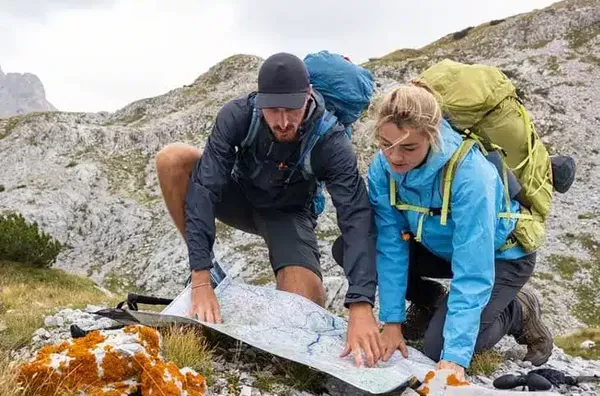
Finding your way without a phone signal
Whatever people may say, a GPX route downloaded in advance solves a lot of problems, provided you have a power bank to avoid panic when your battery drops to 3 per cent in the middle of nowhere.
During the walk, trail markings remain the most reliable guide: short walks are marked in yellow, long-distance walking paths in red and white, or sometimes red and yellow.
Sharing the mountains with wildlife
The local wildlife is constantly watching you, and may show itself if you treat it with respect. You don’t need attract a curious marmot with a bit of your sandwich (however tempted you are) as this is not kind to the animal; it could damage its health more than you realise. If it ventures towards you, simply stand still and let it move on at its own pace. This will make for a much better memory, without you having disrupted its daily life.
To find out more on this topic, we invite you to read ourarticle on respecting the mountains while on our trails.
Know when to turn back
Firstly, there’s no shame in turning back, as the famous explorer Mike Horn puts it so well: “The reward isn’t the summit; it’s getting back down alive.”
Even without going to extremes, there are signs that may make you decide to go back: deteriorating weather, falling seriously behind schedule, or terrain that’s becoming more exposed than expected. Knowing when to turn around is not failure; it’s sometimes the wisest choice to make when facing the mountains.
Enjoy yourself!
Make the most of your mountain walking adventure is, ultimately, the best advice we can give you! All this might give the impression that a hike needs to be prepared for like an expedition, when in fact the essentials remain the same: walking, enjoying the surroundings, and letting yourself be surprised by what the adventure has in store.
So, admire the scenery unfolding before you, let your feet carry you along, and savour the joy of walking in the great outdoors.
Whether it’s a curious whistle from behind a rock or a shadow passing slowly above your head, the valley is teeming with curious creatures, both large and small, who are watching you long before you spot them. Some encounters are almost guaranteed – like a welcome gift from the mountains – whilst others have to be earned and require a little patience and discretion.
And then there are the valley’s most secretive creatures – those you might only catch a glimpse of once in a lifetime, if luck is on your side. To help you, Thibaut, our nature guide with a passion for birdwatching, offers some valuable tips throughout this article. We’ll take you to meet our local stars, from the easiest to spot to the most elusive.
Group 1: The must-sees
Marmot
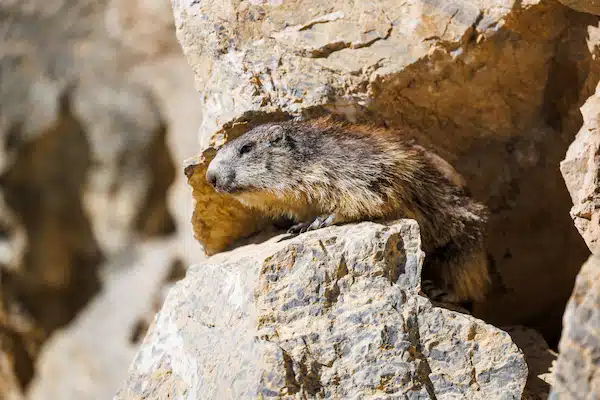
You can’t mistake a marmot, its high-pitched whistle cutting through the air; perched like a sentinel on its rock, warning the colony that an intruder is approaching. A living emblem of Savoie, a marmot is fairly easy to spot, often basking in the sun before darting back into its burrow at the slightest sudden movement.
Morning and late afternoon are its favourite times of day, when the heat is less intense and he can venture out without becoming fatigued. The colonies around Lac Tuéda and on the Plagne plateau are particularly active; if you stop for a few minutes in silence you are likely to see several of them pop their heads out.
Ibex
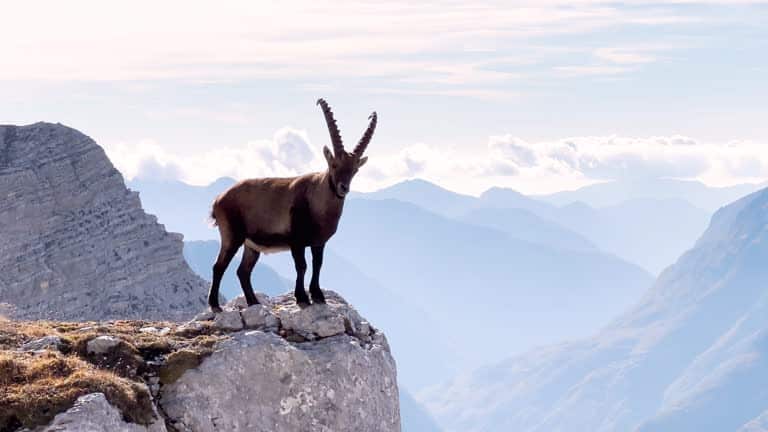
You’ll need to hike a little to find these mountain goats, but once you’re high up, if you look in the right places, one may well appear! Head for the Gébroulaz glacier or the area around the Saut refuge, where chamois and ibex roam the same slopes.
Point your binoculars towards the rocky areas, ridges and boulder fields; you’ll recognise an ibex by its massive horns curving backwards, moving with ease across vertiginous slopes. Once spotted, it proves surprisingly tolerant of human presence, provided you keep your distance and remain quiet.
Group 2: The valley’s shyer inhabitants
Fox
Rarely seen in broad daylight, a fox is more likely to show itself at dusk, when the valley quietens down and it begins to hunt. Contrary to its reputation as a wary animal, Méribel’s foxes are unlikely to bolt at the slightest noise, but you still need to be in the right place at the right time – mostly a matter of patience and luck.
If you hope to see one hunting, it’s best to wait until the dead of night when the forest is silent. With your ears pricked, your chances of catching it in action increase significantly.
Golden Eagle
Recognisable by the golden hue of its adult plumage, this bird’s name in French is the ‘royal eagle’ and it was a symbol of both gods and empires in ancient times. It remains a familiar sight above Méribel, with around twenty pairs continuing to reign over the skies of the Vanoise. Unlike the rare bearded vulture, the golden eagle can often be seen: on fine days, it’s not uncommon to see them soaring high in the sky, silently using updrafts to conserve energy.
From December to March, the mating season even offers a rare spectacle. The pairs perform a series of synchronised flights, soaring and diving together in a choreographed display that is hard to spot, but well worth every minute spent waiting with your neck craned upwards.
Black grouse
Black grouse owes their beauty to their bluish-black plumage and their tail which curves like a lyre. They prefer the upper forest boundaries, between 1,400 and 2,300m, the transitional zone where alpine meadows and sparse woodland meet. To spot one, you need to look above the lake – Thibaut informs us that the black grouse is a species found only in la Réserve de Tuéda.
For much of the year, it remains shy and difficult to approach, but in spring the males gather at their ‘lekking grounds’ for a spectacular display, shaking their tails to the rhythm of their burbling song.
Chamois
Unlike ibex, chamois have short, hook-shaped horns and a coat that darkens in winter. Although found throughout the valley, they remain elusive creatures. They move between the forests and the high mountains depending on the season and their needs and whims.
Here, it’s best to set out early in the morning, when they are most active before the heat drives them into the shade. The best time to spot them is October and November, the rutting season, when the males engage in spectacular duels to impress the females.
To try your luck, head to Pralognan-la-Vanoise, where guided tours regularly take visitors to the Col d’Aiguille or Lac de l’Observatoire in search of the herds.
Group 3: The Holy Grail – the ones you’ll never forget
Bearded Vulture
With a wingspan of 2.80m, a diamond-shaped tail and its famous beard, the bearded vulture certainly makes an impression when it chooses to show itself. Long persecuted and on the brink of extinction in the Alps, it owes its current presence to a reintroduction programme launched in the 1980s, though the population remains vulnerable to this day.
Spotting one in Méribel is, as Thibaut confirms, a matter of luck. It nests on cliffs and may have up to eight different nesting sites across a territory of several hundred square kilometres, changing its nest from one year to the next. Suffice to say that an encounter with this majestic bird is a memory to treasure – it’s a rare occurrence.
Ptarmigan
Immaculately white in winter, mottled brown in summer, this member of the grouse family changes its attire with the seasons to blend into its surroundings. As a result, whatever the season, it generally goes completely unnoticed, even right under your nose.
It is certainly present in Méribel, but you’ll need to climb to higher altitudes to stand any chance of spotting it; it can be found at altitudes ranging from around 2,500m to 3,000m.
Once up there, you’ll still need a trained eye or a lot of luck to spot one.
“The advantage of the Tuéda Reserve is that you’re already quite high up. It’s easier to spot golden eagles and, if you climb higher still, ptarmigans and other high mountain species …”
Thibaut Robert
Stoat (Ermine)
You could spend years hiking in the Vanoise without ever spotting a stoat. Tiny, swift, and capable of changing colour with the seasons – white in winter to disappear into the snow, brown in summer to blend into the scree – it is a true mountain chameleon.
It nests amongst scree, hunts at night in winter and by day in summer, and can cover up to 15km in a single night in pursuit of voles, which makes it even harder to spot.
So if you haven’t managed to spot one by the end of your holiday, don’t blame your powers of observation; it’s simply that the stoat is like a ghost, and far more skilled than we are at the game of hide-and-seek.
Dahu
It is said that an animal even more elusive than the stoat roams our mountains. Half chamois, half ibex, with legs shorter on one side than the other, designed to traverse the slopes without ever falling over – provided it never turns around.
No one has ever actually seen it, but everyone knows someone who knows someone who swears they’ve come across it…
The shutters open to reveal the soft morning light; the valley is still half-asleep, and there’s no rush. No hiking boots are ready by the bed, no plan mapped out for the day. Just the silence of a mountain morning, broken only by the song of a black redstart.
This morning, there’s no list of activities to do. Recharging your batteries isn’t just one of many option in Méribel, it’s a whole way of life.
The essential lunchbreak
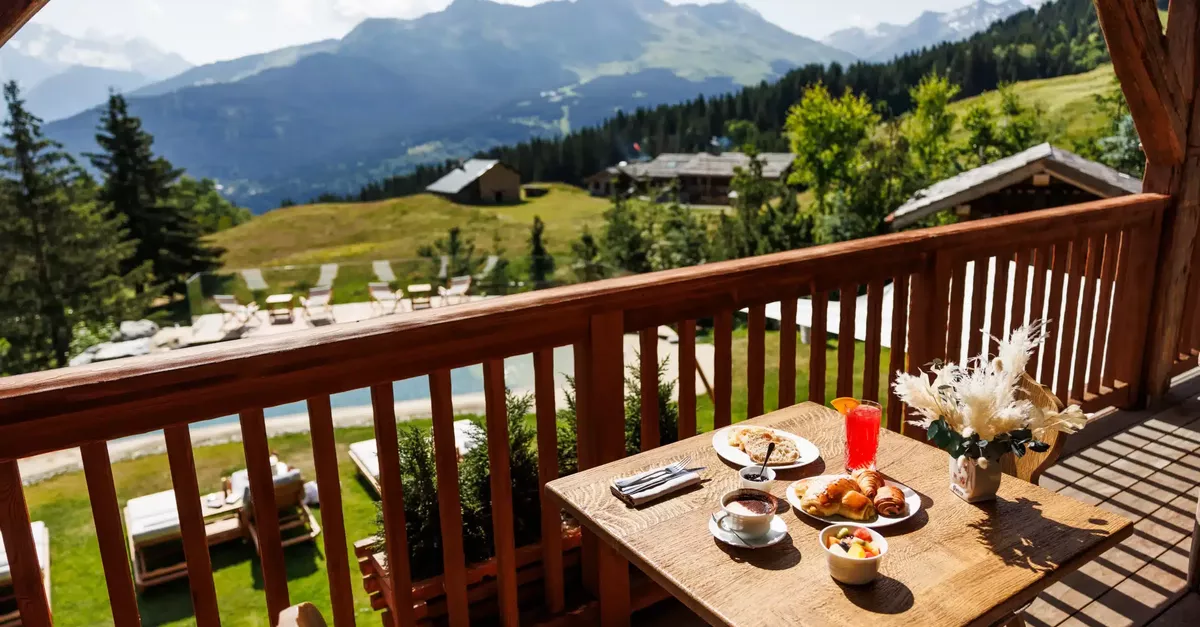
After a leisurely breakfast and a coffee sipped on a balcony overlooking the peaks, it’s hard to imagine the day could pick up pace. But as Savoyard cuisine has top priority, lunch is taken on a terrace with a view of the mountains, in a quiet little square somewhere in the valley. Here, the fondue takes its time to melt and the tartiflette is shared out gradually; these specialities encourage you to savour every moment of the meal.
From Les Allues to Mottaret, there’s no shortage of restaurant terraces, each with its own view and local produce – all that remains is to discover your new favourite places.
These restaurant terraces have a great deal to offer, but there’s nothing to stop you taking the experience up a notch. Gondola lifts in Méribel Centre or Mottaret whisk you effortlessly up the mountains, and in a matter of minutes the whole family is on the summit, picnic basket in hand. You can spread your tablecloth right on the grass (for purists) or sit at a table (there’s no shame in that); in either case, local cured sausages, Tomme cheese and a loaf of bread are absolute essentials.
The silence is different at altitude, almost tangible, disturbed only by the wind or, if you’re lucky, by the whistle of a curious marmot emerging from his hole. Your gaze drifts onto the endless landscape, and you enjoy the view all the more knowing it has been achieved with no effort.
Méribel’s wellness scene
Saunas, hot tubs and more
The resort’s wellness facilities cater to all tastes, whether you want to get the morning off to a good start or unwind completely in the evening.
Saunas, steam rooms, Jacuzzis, sports or relaxing massages – there are so many ways to switch off. Between sauna sessions, the Parc Olympique swimming pool is nearby for anyone fancying a few lengths. And the icing on the cake is that these wellness facilities aren’t just for residents: most of the valley’s hotel spas also welcome non-guests.
Myriad ways to practise yoga
In Méribel, our wellness practitioners find ways to combine their practice with the natural environment. Some instructors combine yoga with a walk in the forest – incorporating ‘nature bathing’, for example – whilst others combine it with Ayurveda for a more holistic approach to body and mind. There are also those who add Shiatsu to the mix – this Japanese pressure technique is designed to release even the most stubborn tension.
Massages follow this same principle of variety, ranging from Amma and Gokan with oils to deep-tissue massage for athletes, and more; each technique offers its own way of releasing tension in the body.
Zen Altitude: the summer’s wellness retreat
From 21 to 23 July, Zen Altitude offers us a moment beyond time. Yoga is complemented by breathing exercises, relaxing treatments are combined with soothing walks, and creative workshops round off this programme designed to help us reconnect with what really matters. Whether on your own, with family or with friends, this event unites us in our desire to take a breather, far from the hustle and bustle of everyday life.
The art of relaxation is not merely an add-on here, but a genuine mind-set that Méribel has been cultivating for years.
There are places that seem designed for a leisurely stroll, and Lac Tuéda is one of them. You can wander around the lake at your leisure, settle down for a nap by the water’s edge, do a spot of trout fishing, and round off your visit with a drink at the Maison de la Réserve. This is a true haven of peace in the heart of an Arolla pine forest, the sort of place you may end up staying longer than you planned.
La Maison de la Réserve visitor centre
On the lakeside, the renowned Maison de la Réserve invites you to take a break of a different kind. As well as a popular cafe, it offers a free permanent exhibition where you can learn about the flora and fauna in the Reserve. A range of activities is on offer to make your visit even more rewarding, notably the birdwatching tour of the Reserve led by Thibaut, an expert guide in his field.
We should warn you: nothing escapes his notice; he may help you spot species you’d only expect to see in a wildlife documentary.
So, while steep mountain climbs are great for those who feel the urge, for the rest of us who enjoy rest and the good life, we prefer to spend our days in a different way. The afternoon ends with the same stillness as the morning began, with the black redstart giving way to the opening notes of an impromptu live performance.
A first taste of glacier climbing with the Méribel guides office
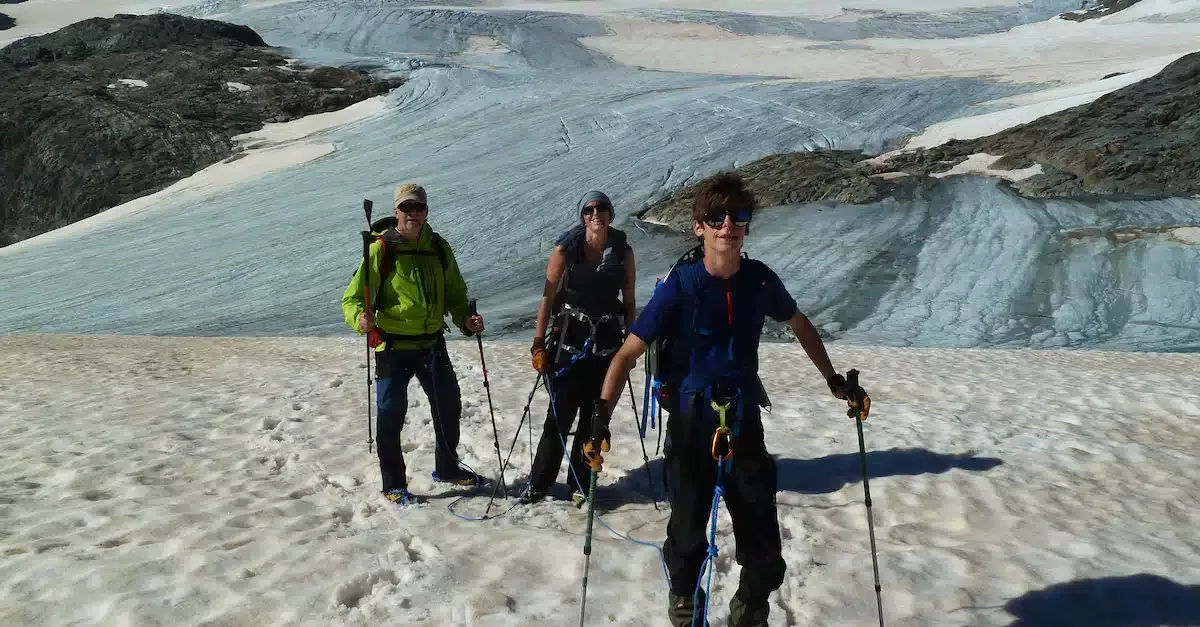
It’s still dark when you strap on your crampons, while your guide ropes you together. Higher up on the glacier, other lights are already moving through the darkness, and you set off to meet them, off the paths you’d always stopped at until now. Day breaks over the glacier, and that feeling every mountaineer knows takes hold of you too: feeling tiny, and yet exactly where you belong.
From Méribel, the Vanoise national park opens the door to these views of glaciers and peaks rising above 3,000m. To help you prepare for your first glacier trekking experience, we spoke with Alain Petex, a guide in Méribel for 25 years. Here’s how a day out with the Méribel mountain guides office actually unfolds.
You are a high mountain guide based in Méribel: what is your story?
I have been a mountain guide in Méribel for at least 20 years. I live in Bride-les-Bains but I am originally from Moûtiers. I arrived in Méribel thanks to Frédéric Saint Guilhem, a former high mountain guide and hotelier in Méribel. At the time, he was looking for a young guide to help him, and that is how I came to work in Méribel.
The Vanoise is a range that I like very much. The landscapes combine the green of the mountain pastures, the blue of the sky and the white of the glaciers which culminate at 3,000 m. This creates a very special atmosphere, one that you don’t find in other mountain ranges.
How does the Bureau des Guides in Méribel work?
At the Méribel guide office, there are 5 high mountain guides and 2 mid-mountain walking leaders in the summer. However, in winter, we are about ten guides for ski touring, off-piste skiing or ice climbing.
How does an introduction to glacier trekking work?
We offer 2 options.
• Over 2 days: we go up to the refuge the day before to be able to do the glacier very early the next morning.
• Over 1 day: we leave Méribel very early in the morning and return in the afternoon.
It is important to know that in summer, a glacier hike must be done very early in the morning. The reason is simple: when it is oo hot, the snow melts. You sink into the snow, so it’s harder to walk. It can also be a bit dangerous because on a glacier there are crevasses that can be more or less covered by snow bridges. Early in the morning, when the snow is hard, you can walk on these snow bridges without sinking. To stay safe, you have to be off the glacier by noon or 1pm.
Which glacier hikes do you recommend for an introduction to mountaineering near Meribel?
For the first option, which involves going up to a refuge on the first day, you can go to the Col de la Vanoise refuge to do the Pointe de la Réchasse or the Pointe du Dard located on the dome of the Vanoise glaciers. The Col de la Vanoise refuge can be reached in a 3-hour walk from Pralognan via the Lac des Vaches. The approach is already a journey in itself, as the setting is magnificent. This refuge is located at 2,500m and the summits are at 3,200m. From the refuge, you have to walk for 2.5 to 3 hours to reach the summit.
Then there is also the Péclet-Polset refuge, which allows you to climb to the Polset dome at 3,501m. The climb requires 4 hours of walking, but the glacier is much more substantial than the first option. It is a glacier with crevasses and seracs, it is still a glacier walk, but in a different atmosphere from the dome of the Vanoise glaciers.
Finally, there is the option that we propose for the day, leaving from Meribel. We leave early by car to reach a road situated at 2,800m, above Val Thorens. We arrive there at 7 am. We then go up to the Chavière glacier, and from there, several options are possible depending on the level of the participants: climb to 3,200 m or climb to the Gébroulaz mountain at 3,509 m.
Mountaineering is a discipline that can be frightening, what do you think is the reality?
Glacier trekking is the ideal discipline for getting started in mountaineering. It carries very little risk, far less than steeper mountaineering routes. On these beginner routes, there are no steep slopes where you could get hurt by slipping. These are glaciers with gentle inclines.
The only real danger is crevasses. That’s why we’re roped together. If someone falls into a crevasse, they stay near the surface and climb out easily.
On a more personal note, I’ve been a guide for 25 years, and I’ve never fallen into a crevasse myself, nor have I ever seen a client fall into one. The rope in mountaineering is like a seatbelt in a car. You wear it, but that doesn’t mean you’ll ever need it.
Niveau et équipement requis
What are the physical requirements for glacier trekking? How does one go about choosing an objective that is adapted to one’s level?
For the routes we have just mentioned, you need to be able to climb at least 800 metres without being exhausted. By way of comparison, the hike from the Lac de Tueda to the Refuge du Saut, a classic in the summer in Méribel, requires an increase in altitude of 450 metres. However, for day-long initiations, it is possible to choose an itinerary with only 300m of ascent to reach the glacier. The destination of the day is always chosen by discussion. We ask a number of questions about your experience in the high mountains, your physical level, your potential fear of heights… Using these elements, we then propose options.
Is it necessary to have already climbed or done via ferrata to do glacier trekking?
No, as the name suggests, it’s only glacier walking. But there are other mountaineering routes in the Vanoise that require a little mountaineering or climbing experience to be done. It’s all about finding the right mountaineering trip for you and your level.
What equipment is provided on the day and what should one bring?
You have to rent the equipment in the rental shops in Meribel, i.e. crampons, shoes suitable for crampons, a harness, a straight ice axe, a helmet and a pair of walking sticks… and obviously you have to have the necessary equipment for the cold and the sun, which is more intense at 3,000m: category 4 glasses, gloves, a down jacket and a windproof jacket…
Finally, there is the equipment provided by the guide’s office: the rope and the safety equipment on the glacier, such as ice pins. How to use this equipment is obviously explained afterwards by the guide on the day.
Can we do an introduction to mountaineering with the family in Méribel?
Yes, glacier trekking with the family is possible. Children are allowed from the age of 12. If the children are good walkers, you can start a little bit earlier, but in most cases, family glacier trekking is more likely to be done around 12 years old.
In practice, for someone who wants to go on a glacier trek, how does it work? What is the first step in making it happen?
The first step is to send an email to the guide’s office before your holiday to get in touch with us. This allows us to choose an itinerary and dates. We do our utmost to offer tailor-made outings to our clients. Then, there are two possibilities: you can either come with a group (maximum 6 people), or join a group if you are alone. The introductory glacier hikes we mentioned earlier are offered all summer long, from June to the end of August. Finally, for an initiation, the price starts from 190 € / person.
20 years as a guide in Méribel, you must have had some great adventures. Can you share with us an outstanding memory that you have experienced in the 3 Valleys?
I remember once I took a group to Polset Dome. There was an 18 year old boy there. I saw him again 20 years later and he was still very happy about the trip. That day he had discovered something and continued to climb thereafter. Being introduced to mountaineering finally opens up the high mountains: you discover life in a refuge, you walk roped up with the day gradually breaking over the summits and glaciers, you see crevasses… In short, it’s a unique experience that leaves its mark, like the young man who spoke about it with stars in his eyes 20 years later.
The Méribel guide’s office offers other options beyond glacier trekking, what other activities are available in Méribel?
In the summer, the guide’s office also offers via ferrata, canyoning, climbing, mountaineering and themed hikes. We accompany both sporty people who want to discover or progress in a mountain sport, as well as families and less athletic individuals who want to discover nature and the mountains.
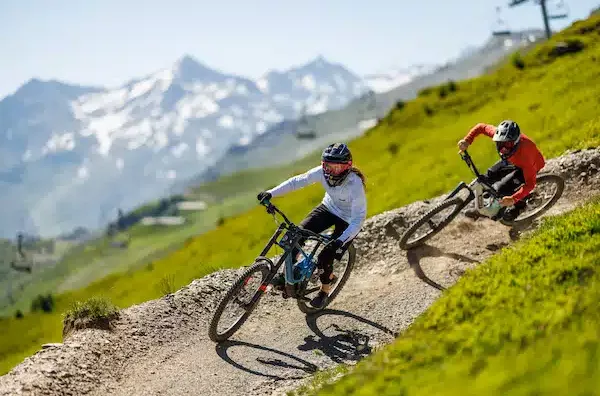
Good news: the reality is far more nuanced than what Red Bull shows you. We’re debunking the five most persistent myths, so that DH mountain biking can finally be associated with excitement rather than apprehension.
“One fall and it’s all over for me”
Let’s be honest, falling is all part of the game, just like when you’re skiing, cycling or in life in general. The Bike Park works exactly like ski slopes, and no one’s going to put you on a black run on your first day. Add to that a full-face helmet and protective gear covering practically your whole body, and that dreaded fall turns into a fit of laughter shared with your group.
“I'll be completely worn out after 10 minutes”
Good news for your legs: you don’t need the stamina of a marathon runner – the ski lifts do all the hard work of getting you uphill. That said, downhill mountain biking does require a bit of strength in your arms and shoulders to absorb the impacts, but it’s nothing you can’t handle with the right kit and a bit of technique. If the idea of cycling without getting tired really appeals to you, an e-MTB is just the thing for you.
"You’ve got to have all the pro kit"
A classic misconception that puts far more people off than it should… Of course, riding your own bike has its charm and advantages, but it’s by no means essential for having a great day out. The equipment available for hire is top-notch, selected by experts who know the Bike Park inside out and know exactly what gear to recommend based on what you plan to do.
"I’m too old to be a stuntman now"
Downhill mountain biking isn’t just for young people. On the trails at Méribel Bike Park, you’ll come across plenty of families and groups of friends who are no longer in their twenties, and who are simply looking to have a bit of fun without having to go to extremes. Our young people in their prime are there too, but they’re far from having a monopoly on the fun!
"Without a coach, it’s impossible to improve beyond the basics"
Wrong. You can certainly improve on your own by starting on the easiest runs, then moving on (after a fair few falls) to more challenging terrain. With time, motivation and a good dose of resilience, it’s entirely possible to reach a top level as a self-taught skier.
But if the aim is to move on to red and black runs without ending up off-piste straight away, Méribel’s qualified instructors make all the difference. Getting the right reflexes from the outset not only saves a considerable amount of time, but also means you’ll progress without picking up bad habits that’ll follow you on every run. And, between you and me, being coached by someone who knows every bend in the Bike Park like the back of their hand is still the best shortcut to the thrills you’ve come here for.
So, are you convinced?
At the end of the day, downhill is all about thrills and freedom, and everyone experiences them in their own way. Some will need the G Force to really get their adrenaline pumping, whilst others will be happy with a simple ride on an e-MTB along the ridges. The Méribel Bike Park was designed precisely for this purpose: to cater for everyone, from families to experienced riders, so next time, forget the excuses and come and see for yourself!
Some arrive with a packed itinerary, their eyes sparkling at the thought of tackling all the resort’s activities; others set down their suitcases with just one certainty: to slow down. Let’s follow two families who’ve chosen the mountains this summer, for very different reasons.
Finding one’s feet
Those first few days in Méribel have that special charm of anticipation and discovery, as you find your feet, explore and settle into a rhythm. For families seeking adventure, start with a hike through the villages in the valley – just to get your legs warmed up and soak up the Savoyard heritage before tackling more challenging routes. The next day, a hike isn’t enough for the children any longer, so a visit to the Bike Park is a must. A leisurely family exploration of the resort on the green and blue runs – there’s still plenty of the week left.
On the other side of the resort, the atmosphere is completely different. Yoga by the shores of Lake Tuéda in the morning silence, with the peaks reflected in the water and your breath finally settling. Meanwhile, the children are discovering “Les P’tits Aventuriers”, supervised by enthusiastic instructors and with a never-ending stream of activities – it’s pure joy. A great way to start the week that sets the tone for the rest of the holiday.
Halfway through, you find your rhythm
Our sporty family are off and running, kicking things off with the Dent de Burgin via ferrata – quite simply the highest in France – to get the adrenaline pumping. Straight after, they head for the Col de la Loze on e-MTBs, with the 3 Vallées stretching as far as the eye can see from the summit.
On Friday morning, up bright and early with one mission in mind: the Gébroulaz Glacier, an organised group with a mountain guide. Up there, the rock gives way to ice and the rugged high-mountain panoramas unfold before them. What a panorama, what luck …but no, views like this have to be earned!
Happiness looks different for everyone
The family, seeking a more relaxing pace has also found its balance. The golf driving range in the sunshine, the children in the play area, and that drink on the terrace that naturally becomes the order of the day as the morning draws to a close. On Friday, with sandwiches tucked away in their bags, it’s off to the ski lifts! By the time they’ve reached the top, the scenery has changed, the air is crisper and the picnic takes on a whole new dimension. In the afternoon, the little ones dash off to meet the pony whilst the parents slip away discreetly to unwind at the spa.
That evening, as they round the corner onto Jack’s famous terrace, the two families bump into each other quite by chance. One is returning, exhausted yet happy after their day in the mountains; the other, who’ve been sitting there for a while with a drink in hand, have never felt so rejuvenated.
Enjoying the last few days to the full
At the weekend, everyone naturally returns to whatever it is that really excites them. The Bike Park trails for some, Lake Tuéda and its peaceful shores for others. The local Sunday morning market, however, brings everyone together. It’s hard to resist the local produce – you end up regretting not having bought more, don’t you?
And then comes that moment we all share, which Méribel provokes every single time. That slight reluctance when it’s time to pack your bags. That certainty that one more day would not be too much…
What they have in common: the Explorer Pass
As we’ve seen, our two lovely families enjoy very differently paced holidays. And yet, they both slipped the same pass into their pockets at the start of the week!
One used it to go from one activity to the next without ever stopping, the other to enjoy the freedom of not planning anything, of changing their mind three times a day and of spending their mountain holiday exactly as they pleased.
Somewhere on a terrace in Méribel Village, two families who didn’t know each other last week are raising a glass whilst admiring the same golden mountain ridges. Both have their heads full of memories, and share the conviction that a week in Méribel is just not long enough.
Where to take your dog in Méribel?
There are several routes that are particularly well suited to dog walking, provided you choose your route carefully. We’ve selected three summer trails that will appeal to your 4 legged friend just as much as they will to you. In winter, the snow offers so many different play areas that we could have listed a dozen, but we’ve opted to stick to just three that really stand out from the rest.
Summer
Le Grand Lac, via Chandon and Gremaillet
For dogs who love a dip in the water, head for Le Grand Lac via Chandon and Gremaillet. This walk takes you through hamlets and forests before reaching a lake where your dog can finally swim freely, unlike the protected lakes in the valley. A real reward after all that effort, for both of you.
Rocher de la loze
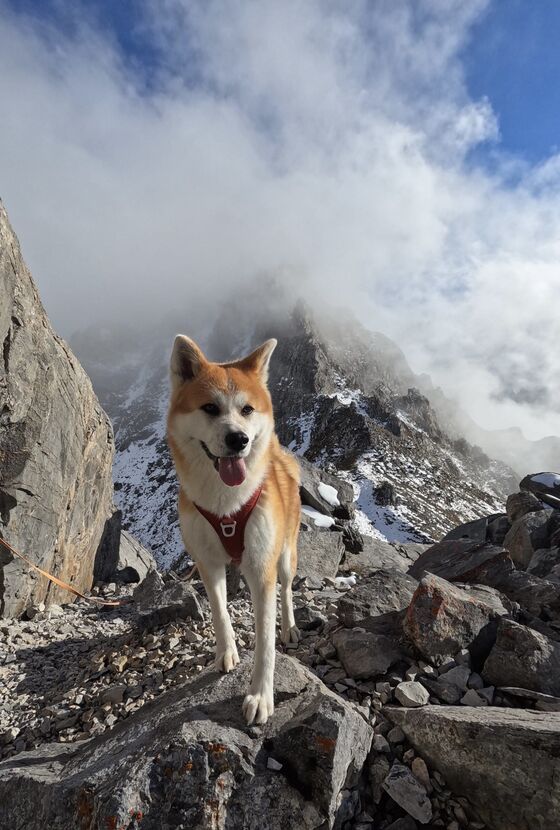
From Méribel, access is via the Pas du Lac cable car, followed by a walk along the ridges to the summit, offering a 360° panorama of Mont Blanc, the Vanoise and the surrounding peaks. The path remains accessible, apart from a short section with a cable beneath the rock, which should be negotiated with care if you are carrying your dog or keeping it on a tight lead. A hike that combines altitude, thrills and wide open spaces, for pairs seeking adventure.
Descent to Les Allues via the ridge paths
An ideal route for lovers of sweeping panoramas and long walks. In summer, the view stretches across the Méribel valley, Mont Blanc, Mont Jovet, the Belleville valley and the Aiguilles d’Arves. Allow around 5½ hours to descend to Les Allues from the summit of the ridges; this hike is best suited to dogs that are already well-trained to follow their owners over long distances.
Winter
The Poetry Trail
If your dog is happy in the snow and loves rolling around in the powder, head for the Sentier de la Poésie (locally known as “Poets”). Starting from Les Allues, this snowshoe walk takes you through the villages of Le Cruet and Le Villard, featuring 25 poems and superb views of the valley. Allow about 25 minutes one-way (you can come back via the road), and bear in mind that the trail is usually well covered in snow.
Getting to the Altiport from Méribel Centre
This route is ideal for your dog to take its first steps in the snow. The trail is very accessible and passes through the hamlet of Morel. On arrival, the Altiport offers unobstructed views over the Méribel Valley. Allow around 3 hours for the round trip. You can also take the shuttle back to Méribel Centre.
To La Traie, via Les Ravines
For sturdy dogs well accustomed to exertion, this more challenging hike climbs from Les Ravines towards Les Granges, crosses Mergolaz and ascends to La Traie. Allow around 6 hours for the round trip, with the reward of a magnificent view over the Vanoise massif and Mont Blanc. This walk is particularly suitable for breeds accustomed to long distances and cold weather, such as a Bernese Mountain Dog or a Saint Bernard. A shorter alternative is available from Le Villard, taking under 2 hours to climb.
A word from our dog experts to ensure your outings go as smoothly as possible, for both your dog and the environment:
– Dogs must be kept on a lead on most trails, especially when approaching mountain pastures where herds are grazing. If you come across a Patou, the correct approach is the same as when walking alone: avoid sudden movements, and move away calmly whilst keeping your dog firmly on the lead.
– Don’t forget to bring water; dogs can become dehydrated quickly when exerting themselves, especially in the height of summer. A water bottle or a collapsible water bag is more than enough.
– As for wildlife, the temptation to chase a marmot or a fox can be overwhelming, particularly if the dog is off the lead, but this remains prohibited and stressful for the animals. Once again, keeping the dog on a lead is the best solution.
And on the way back, there’s one little thing you shouldn’t forget: check the paw pads, as stony paths can be tough on them, especially over long distances.
What equipment should you use for dog hiking?
Whilst a dog hike can certainly be enjoyed in a relaxed manner without any special kit, there is still specialist equipment available for those who want to take the experience a step further. For a comfortable and well-equipped dog hike, here’s what can really make a difference:
For the dog:
– a pulling harness, not a walking harness.
– a sturdy collar so you can safely lead your dog by the collar when necessary.
– booties to protect their paws if the ground is rough
– poo bags
For the human:
– your usual hiking kit
– a canicross harness or a dog-hiking belt. It’s also possible to attach your dog to the waist belt of your hiking rucksack.
– a canicross or canihiking lead with a shock-absorbing elastic cord
What your walking partner won’t be able to find out
Although Méribel is very dog-friendly, the heart of the Vanoise National Park is off-limits to dogs, even when kept on a lead, with the exception of assistance dogs accompanied by official documentation. This is, of course, not because of the dogs themselves, but to preserve the fragile balance of the mountain ecosystem.
In the Plan de Tuéda Nature Reserve, dogs are allowed on a lead, but only as far as the Plan refuge; beyond that, towards the Vallon du Fruit or the Refuge du Saut, you will need to leave your four-legged friend at home.
When it comes to swimming, a word of caution: mountain lakes, and Lake Tuéda in particular, are not suitable for dogs to swim in. Better to bring a water bottle than to let your dog cool off in these natural water sources.
For everything else, there’s no reason to leave them at home!
Of course, a holiday in Méribel takes a little planning, but there’s no need to stress about it!
A few well-chosen tips, the right bookings at the right time, and the rest will fall into place. We’ve put together the essentials to help you arrive feeling relaxed.
Choosing the right moment
In early July, Méribel comes to life and the summer season gently gets underway. The trails are still relatively quiet, but the resort is already buzzing. It’s the perfect time to enjoy the activities and restaurants without worrying about fully booked slots. All the activities are already open, and something that isn’t said often enough: early July is often the best time to enjoy the mountains.
By mid-July, things pick up a pace as the lively, festive valley enters its peak season. From the Méribel Trail and the Hybrid Games to Zen Altitude, events punctuate the weeks. Take note that guided activities are in demand and the terraces are popular. But whether you’re a family or a group of friends, this is the perfect time for those who want to experience Méribel at its most vibrant.
By late August, the pace slows down and the mountains catch their breath. There are still enough people around to keep village life going, the terraces remain lively, and you can enjoy your favourite activities. All this, and a more leisurely pace than in the preceding weeks. Plus there’s that late-summer light on the peaks; golden, soft, a little melancholic. Very often, it’s the best time to not want to leave.
Find your own little corner of the valley
Les Allues
The original village, built over a century ago before the development of the ski area. Authentic local life, far from the hustle and bustle of the resort but with a choice of restaurants and bus links to resort, this is where the Savoyard heart of the valley beats. The ideal spot for those seeking to immerse themselves fully in the history and authenticity of Méribel.
Méribel Village
A hamlet steeped in Savoyard tradition. Charming and authentic, this neighbourhood is ideal for families seeking a more intimate mountain experience, without sacrificing comfort.
Méribel Centre
The lively heart of the valley. Shops, restaurants, entertainment – everything is within walking distance. The perfect choice for those who want village life and a warm atmosphere, without having to rely on a car or shuttle bus to access amenities.
Méribel Mottaret
For those who want the mountains right on their doorstep. The highest neighbourhood in the valley, with direct access to the ski lifts and panoramic views of the valley right from your doorstep.
Still not sure ? All the Still not sure ? All the information you need to choose your neighbourhood is right here.
What we plan, what we leave to chance
In the mountains, it’s all about balance. If your schedule is too packed, you’ll miss out on that unique sense of freedom that comes with a mountain holiday. When you open your shutters to a view of the valley, the only question that matters is: what would make me happy today? On the other hand, if you let yourself drift too much, you risk missing out on what’s truly worth experiencing. Here are a few pointers to help you find your way.
What’s worth booking
Among the finest experiences Méribel has to offer, the excursions organised by the guides’ office are in a league of their own. Glacier hikes on the Gébroulaz Glacier, themed nature trails, and introductory high-mountain courses – these excursions require a bit of planning, but they are well worth the effort.
Another way to take in breathtaking views is to take off from Tougnète or the Dent du Burgin in a paraglider. This is a unique experience. Morning flights, in the cool air above the still-sleeping valley, are among the most memorable moments you can experience here.
A round of golf also warrants planning ahead, especially in August. Perched at an altitude of 1,500 metres and stretching over more than 35 hectares, Méribel’s 18-hole course is one of the most spectacular in the Alps, and therefore highly sought-after.
The same applies to fine dining: the best restaurants are worth the effort. It’s easy to find a wealth of quality restaurants in Méribel that don’t require a booking, but for a special event, it’s best to book in advance. Whether it’s a gourmet restaurant with breathtaking views of the peaks or lunch on a terrace facing the ridges, these are the sort of places you don’t leave to chance.
What you can decide on the morning itself
Everything else… and that’s already plenty! Enjoy marked walking trails, pedestrian ski lifts, the swimming pool, the ice rink, the tennis courts and plenty of other activities without needing to book, just as you please. That’s precisely where the balance of your holiday lies: letting yourself go, without overthinking it.
And that’s exactly what the “Pass Explorateur” covers, with over 20 activities available at no extra cost, so you can plan your days however you like. Find out more about this essential travel companion: Pass Explorateur Méribel.
In the evening, as the last rays of the setting sun fade away, Méribel comes to life. Live music is part of the valley’s DNA; in the early evening, the first notes ring out on the terraces of the many bars such as the Rambler in Mottaret, the perfect spot to unwind after a great day in the mountains. On the programme: rock bands, original artists and folk musicians.
Méribel Village has long been a favourite haunt of British visitors. The terraces come to life from late afternoon onwards, accents mingle and the atmosphere naturally takes on that laid-back feel you don’t find everywhere. La Terrasse du Village epitomises this, always bustling, often in full party mode, with an alpine village atmosphere that makes you want to stay. In the same vein, Jack’s at La Chaudanne is a must-visit in Méribel. Live music from on Friday evenings and Sunday afternoons on a large sunny terrace, ideal for kicking off the evening or letting it drift on without even realising it.
Pack for the mountains, not for the resort
Always be aware that you are at altitude, the weather can change very quickly and needs to be respected….at 1,600 metres, the sun beats down more fiercely than you might think; a lovely morning can suddenly turn into a briefly stormy afternoon, and evenings can get chilly even in the height of summer. But don’t worry, it’s not the kit that makes the hiker. The essentials: water, sunglasses, layers, good walking boots, a light jacket always in your rucksack, and effective sun cream (essential).
A few tips from the locals
The Tourist Office is your first port of call: It’s not just for brochures. The team can guide and advise you, and knows the best times to visit and places that aren’t necessarily in the guidebooks. A must-visit from day one.
The Pass Explorateur: Many families arrive without realising it exists. €69 for 3 days or €99 for 6 days, with over 20 activities included. One of the best value-for-money experiences in the valley, especially for children.
Book early for guided activities: Guide office, paragliding, supervised outings. In July and August, slots fill up fast. Try to book at the start of the week, not the day before.