 Book
Book 

Articles
April 29, 2026
The best moments of the winter season
The sun is warming the fir trees. The snow is melting, giving way to flowering pastu…
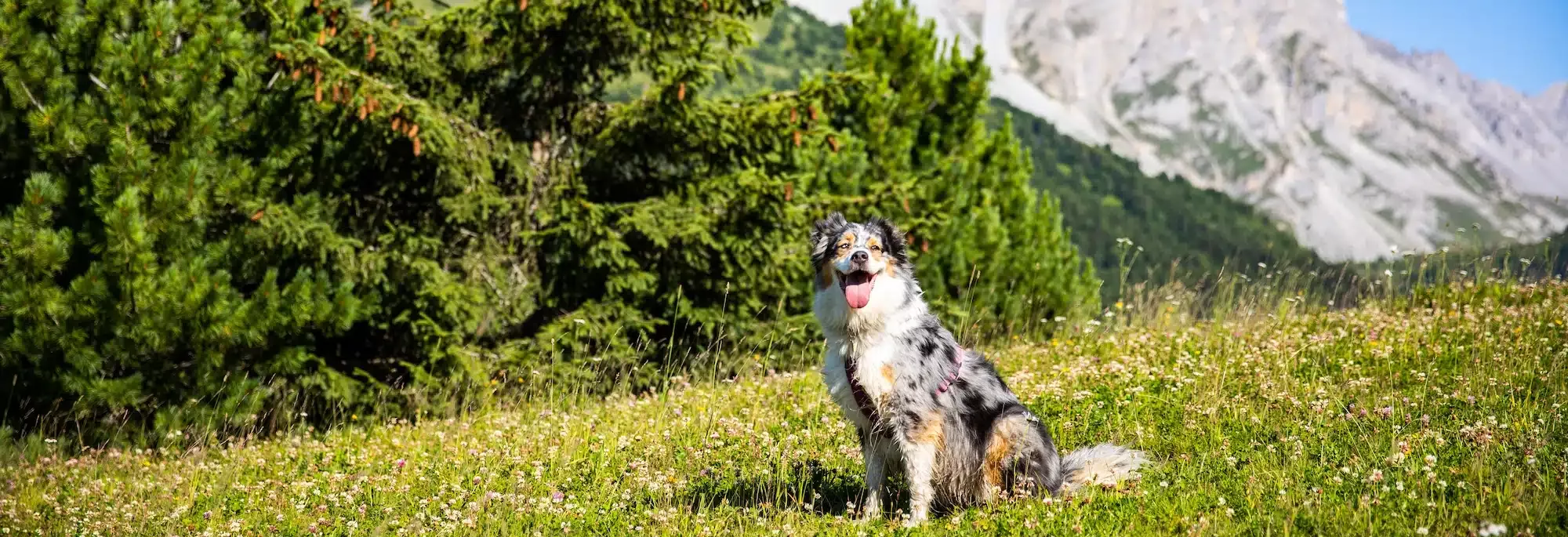
The rucksack is only half packed when your dog starts to get excited. As you take your walking boots out of the cupboard and fill your water bottle, he’s already got the picture. When you finally grab the lead, he’s over the moon: his tail’s wagging like mad, ready to sniff every nook and cranny of the path.
There are several routes that are particularly well suited to dog walking, provided you choose your route carefully. We’ve selected three summer trails that will appeal to your 4 legged friend just as much as they will to you. In winter, the snow offers so many different play areas that we could have listed a dozen, but we’ve opted to stick to just three that really stand out from the rest.
For dogs who love a dip in the water, head for Le Grand Lac via Chandon and Gremaillet. This walk takes you through hamlets and forests before reaching a lake where your dog can finally swim freely, unlike the protected lakes in the valley. A real reward after all that effort, for both of you.
From Méribel, access is via the Pas du Lac cable car, followed by a walk along the ridges to the summit, offering a 360° panorama of Mont Blanc, the Vanoise and the surrounding peaks. The path remains accessible, apart from a short section with a cable beneath the rock, which should be negotiated with care if you are carrying your dog or keeping it on a tight lead. A hike that combines altitude, thrills and wide open spaces, for pairs seeking adventure.
An ideal route for lovers of sweeping panoramas and long walks. In summer, the view stretches across the Méribel valley, Mont Blanc, Mont Jovet, the Belleville valley and the Aiguilles d’Arves. Allow around 5½ hours to descend to Les Allues from the summit of the ridges; this hike is best suited to dogs that are already well-trained to follow their owners over long distances.

If your dog is happy in the snow and loves rolling around in the powder, head for the Sentier de la Poésie (locally known as “Poets”). Starting from Les Allues, this snowshoe walk takes you through the villages of Le Cruet and Le Villard, featuring 25 poems and superb views of the valley. Allow about 25 minutes one-way (you can come back via the road), and bear in mind that the trail is usually well covered in snow.
This route is ideal for your dog to take its first steps in the snow. The trail is very accessible and passes through the hamlet of Morel. On arrival, the Altiport offers unobstructed views over the Méribel Valley. Allow around 3 hours for the round trip. You can also take the shuttle back to Méribel Centre.
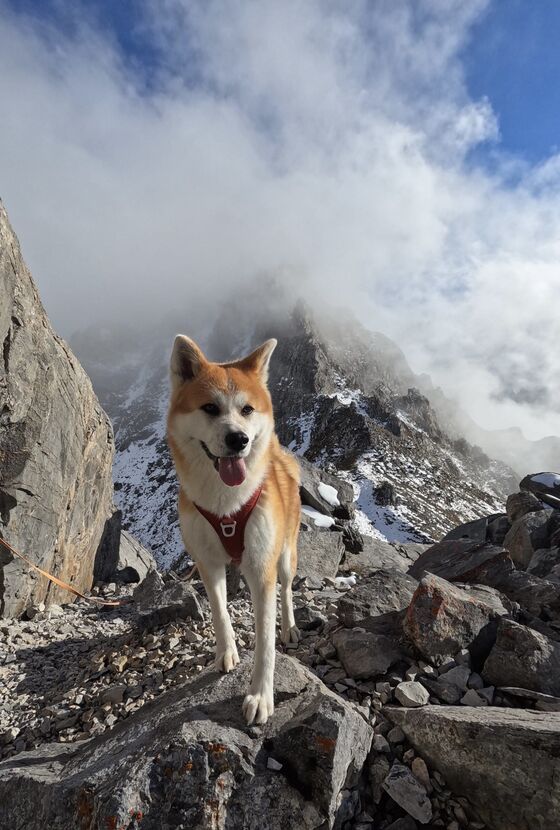
For sturdy dogs well accustomed to exertion, this more challenging hike climbs from Les Ravines towards Les Granges, crosses Mergolaz and ascends to La Traie. Allow around 6 hours for the round trip, with the reward of a magnificent view over the Vanoise massif and Mont Blanc. This walk is particularly suitable for breeds accustomed to long distances and cold weather, such as a Bernese Mountain Dog or a Saint Bernard. A shorter alternative is available from Le Villard, taking under 2 hours to climb.

A word from our dog experts to ensure your outings go as smoothly as possible, for both your dog and the environment:
– Dogs must be kept on a lead on most trails, especially when approaching mountain pastures where herds are grazing. If you come across a Patou, the correct approach is the same as when walking alone: avoid sudden movements, and move away calmly whilst keeping your dog firmly on the lead.
– Don’t forget to bring water; dogs can become dehydrated quickly when exerting themselves, especially in the height of summer. A water bottle or a collapsible water bag is more than enough.
– As for wildlife, the temptation to chase a marmot or a fox can be overwhelming, particularly if the dog is off the lead, but this remains prohibited and stressful for the animals. Once again, keeping the dog on a lead is the best solution.
And on the way back, there’s one little thing you shouldn’t forget: check the paw pads, as stony paths can be tough on them, especially over long distances.
Whilst a dog hike can certainly be enjoyed in a relaxed manner without any special kit, there is still specialist equipment available for those who want to take the experience a step further. For a comfortable and well-equipped dog hike, here’s what can really make a difference:
– a pulling harness, not a walking harness.
– a sturdy collar so you can safely lead your dog by the collar when necessary.
– booties to protect their paws if the ground is rough
– poo bags
– your usual hiking kit
– a canicross harness or a dog-hiking belt. It’s also possible to attach your dog to the waist belt of your hiking rucksack.
– a canicross or canihiking lead with a shock-absorbing elastic cord

Although Méribel is very dog-friendly, the heart of the Vanoise National Park is off-limits to dogs, even when kept on a lead, with the exception of assistance dogs accompanied by official documentation. This is, of course, not because of the dogs themselves, but to preserve the fragile balance of the mountain ecosystem.
In the Plan de Tuéda Nature Reserve, dogs are allowed on a lead, but only as far as the Plan refuge; beyond that, towards the Vallon du Fruit or the Refuge du Saut, you will need to leave your four-legged friend at home.
When it comes to swimming, a word of caution: mountain lakes, and Lake Tuéda in particular, are not suitable for dogs to swim in. Better to bring a water bottle than to let your dog cool off in these natural water sources.
For everything else, there’s no reason to leave them at home!
The best moments of the winter season
The sun is warming the fir trees. The snow is melting, giving way to flowering pastu…
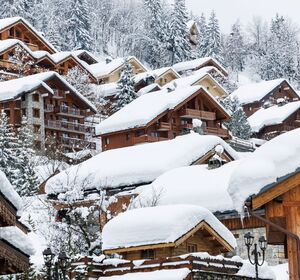
A ski holiday in the heart of Les 3 Vallées
Welcome to the heart of the world’s largest ski area!

The Art of Après-Ski in Méribel
The day is drawing to a close, the sun is setting behind the ridge and you have disc…
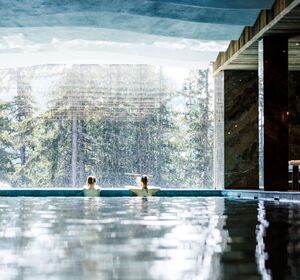
A relaxing break in Méribel
Winter in the mountains isn't only about hurtling down the slopes!